


Is Bone Deficiency an Obstacle to Implant Treatment? The Power of Biomaterials
11 April 2026 Health Guide Mustafa PAYASIn the restoration of missing teeth, implant treatment is the gold standard, largely owing its success to the bone volume in the area where it is placed. However, many patients worry that they may be deprived of this comfortable treatment due to "insufficient bone." Advanced dental technology and materials science are now making this concern a thing of the past.
Why Does Bone Loss Occur?
After tooth extraction, the bone tissue in the area begins to recede (resorption) over time because it no longer bears a load. Additionally, advanced gum diseases or long-term use of removable dentures can significantly reduce bone volume. For an implant to function healthily, a specific thickness of bone support is essential.
The Role of Biomaterials and Hydroxyapatite Coating
Traditional methods often required complicated procedures like bone transfers from other parts of the body when bone was insufficient. However, in modern dentistry, biomaterials that are 100% compatible with bone structure and specialized surface technologies have made the process much more practical.
Particularly, hydroxyapatite-coated implants and similar surface modifications encourage bone cells to attach to the implant surface much faster and more strongly (osseointegration). Thanks to this technology:
-
High success rates can be achieved even in lower bone density.
-
The healing process is shortened.
-
The lifespan of the implant is extended in areas with weak bone quality.
Advanced Surgical Solutions: Sinus Lifting and Bone Grafts
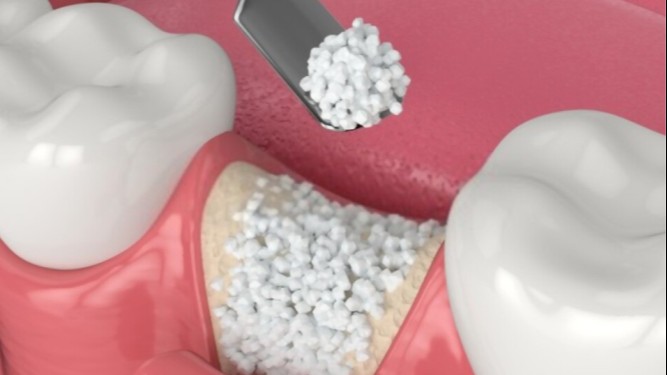
In cases where sinus cavities in the upper jaw sag or the bone in the lower jaw becomes extremely thin, grafting procedures (bone powder) are applied.
-
Sinus Lifting: A secure site for the implant is created by lifting the sagging sinus floor in the upper back jaw.
-
Horizontal and Vertical Augmentation: This involves expanding the bone in width or height to a form that can support the implant.
Precise Approach with Digital Planning
In cases where bone quantity is critical, 3D digital scans and tomographic analyses are vital. Placing the implant at the densest point of the bone with millimetric calculations minimizes surgical risks and increases post-operative comfort.
Conclusion
If you have previously been told that "implants cannot be performed due to bone deficiency," you should know that this is not the end of the road. With modern surgical techniques, bone-compatible materials, and digital planning, it is possible to achieve long-lasting and aesthetic results even in the most challenging cases.

0 Yorum
Yorum Yaz